Owning a dog in the UK, explained
Walking Your Dog in Hot Weather: How to Prevent Heatstroke
8 November 2026
Heatstroke is a very serious condition that can progress very quickly, the vet charity PDSA says, and in severe cases it can cause seizures, organ damage and death. Most cases in dogs happen during exercise, which is why the timing and length of a walk matter so much on hot days. Here's PDSA's advice on preventing it and what to do if it happens.
Quick answer: On hot days, walk your dog in the early morning or evening, not the hottest part of the day. PDSA says never to walk your dog on a hot surface: if you can comfortably rest the palm of your hand on it for 7 seconds, it's okay. Take water, keep to shade, and never leave your dog in a car on a warm day. If your dog shows signs of heatstroke, move it somewhere cool, start cooling it with cold water straight away and call your vet.
Key Takeaways
PDSA says nearly three quarters of heatstroke cases develop while dogs are playing and exercising.
Walk early in the morning or in the evening when it's cool, not in the hottest part of the day.
PDSA's surface test: if you can comfortably rest your palm on the ground for 7 seconds, it's okay to walk on.
Flat-faced, overweight, giant-breed, thick-coated, very old and very young dogs are most at risk.
Never leave a dog in a car on a warm day, not even for a few minutes.
Why dogs overheat
Dogs have a limited ability to sweat. PDSA explains that they pant and use shade to cool down instead. A dog's normal body temperature tends to sit between 38 and 39°C, and above 40°C a dog is at risk of heatstroke.
Dogs also love to run around. PDSA's heatstroke guide says nearly three quarters of heatstroke cases develop while playing and exercising. It can also happen when a dog is simply sitting somewhere too warm, or is trapped somewhere hot, such as a car, a conservatory or a room without proper ventilation.
Which dogs are most at risk
Any dog can develop heatstroke, but PDSA says flat-faced, overweight, giant-breed, thick-coated, very old and very young dogs are most at risk.
Flat-faced (brachycephalic) dogs have much less space inside their nose, so they struggle to lose heat as they breathe out. PDSA says this puts them at a very high risk of heatstroke, even on cool days. It reports that British Bulldogs are 14 times more likely to develop heatstroke than Labradors, and Pugs 6 times more likely.
Planning a walk on a hot day
PDSA's prevention advice for walks comes down to a few habits:
Walk your dog when it's cool, in the early morning or evening, and avoid the hottest part of the day.
On hot days, skip exercise completely if your dog is unfit, elderly, young, overweight, unwell or has breathing difficulties.
Make sure your dog always has shade and water, and take water with you on walks.
Use a harness rather than a collar for the lead, so there's less pressure on your dog's throat and it can pant more easily.
Keep your dog's collar on even when you use a harness, because PDSA points out it's a legal requirement.
Our guide to dog microchipping law explains the collar and tag rule.
Test the ground with your hand
PDSA says never to walk your dog on a hot surface. If you can comfortably place the palm of your hand on the ground for 7 seconds, it's okay. Sand, artificial grass and tarmac get especially hot.
Keeping cool on warm days
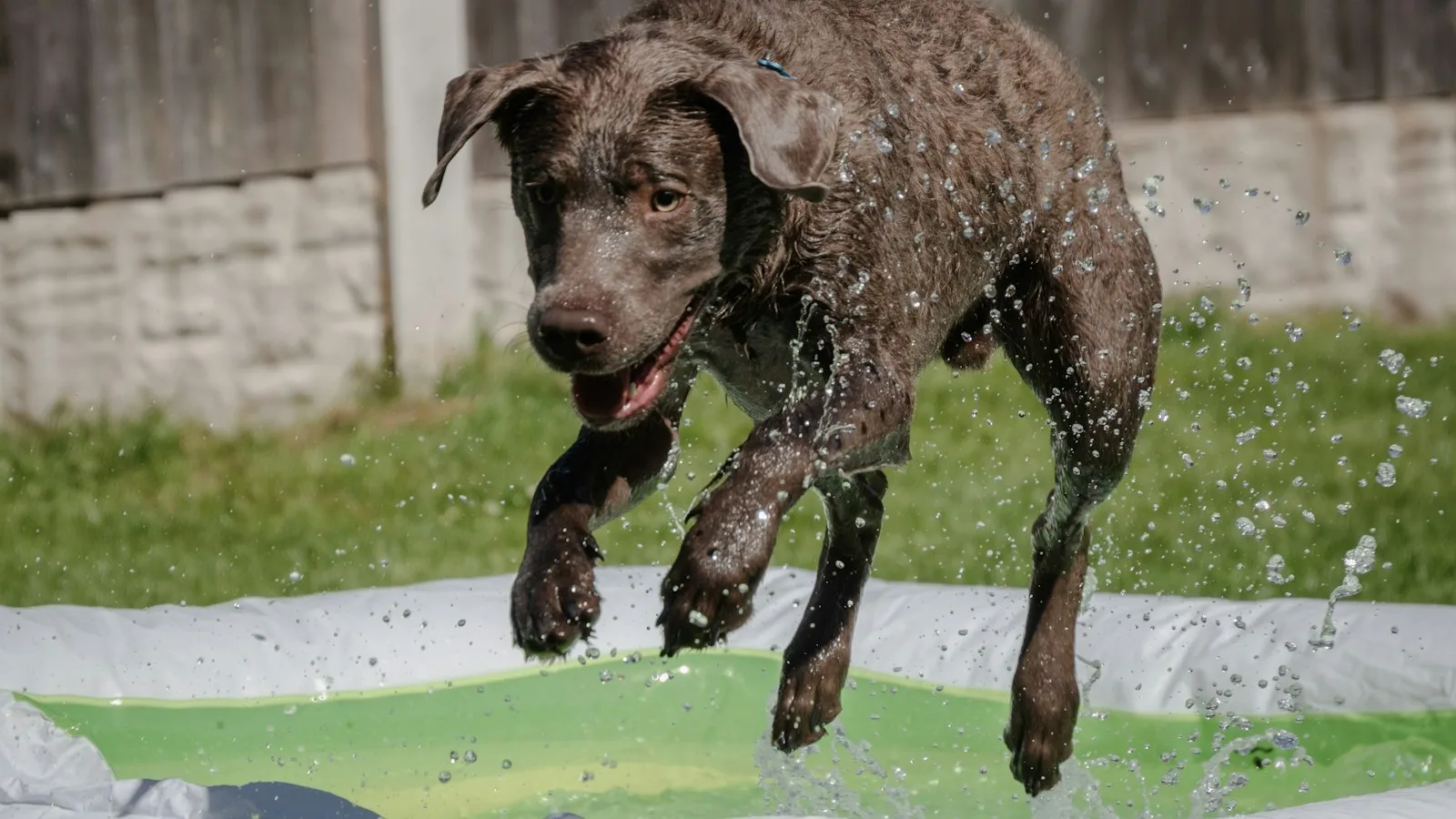
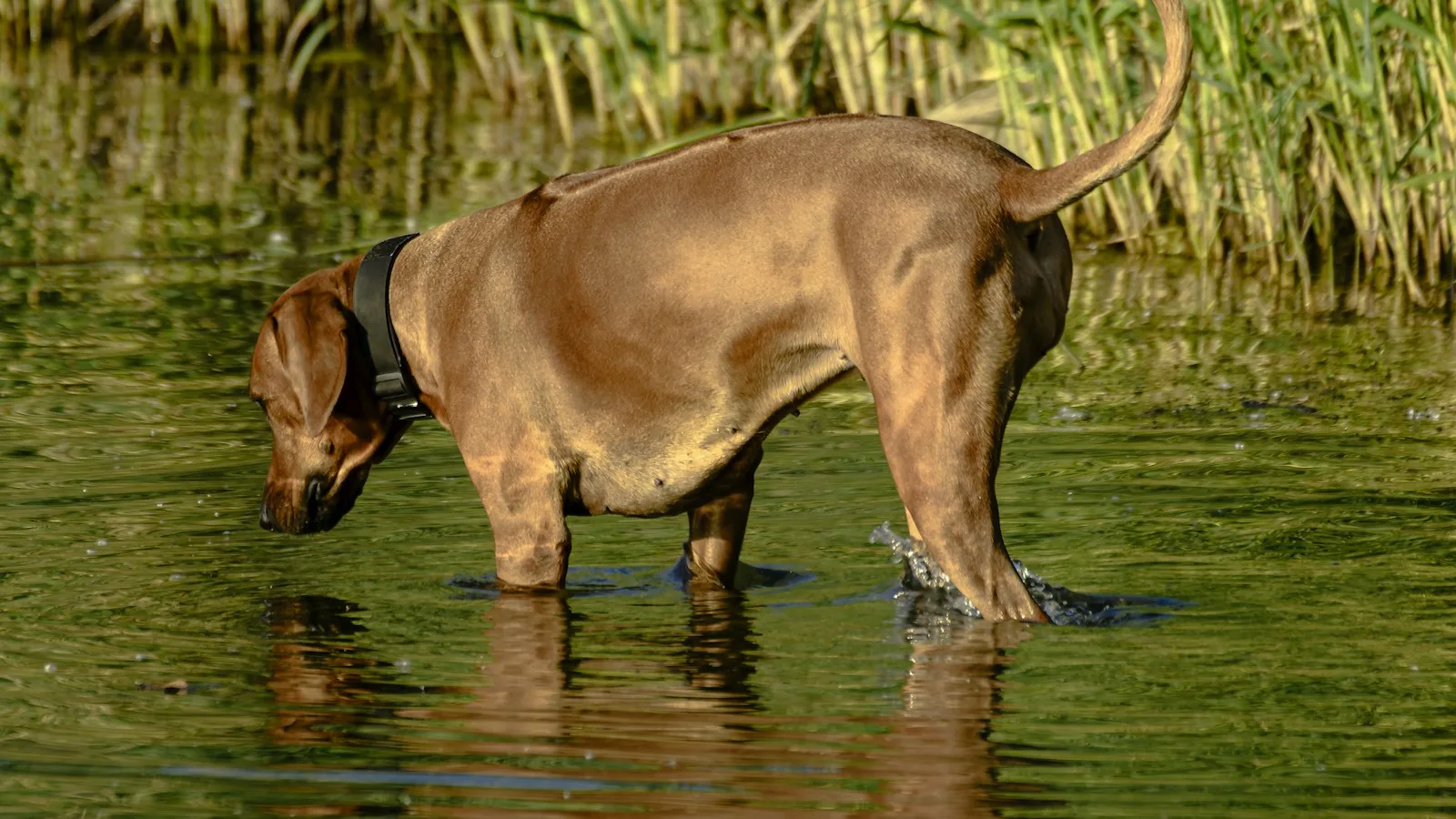
PDSA suggests getting your dog wet on hot days, by pouring water over it or encouraging it into cool water, such as a paddling pool. Make sure it stays in the shade and doesn't get too excited, because that can still cause overheating. Never force a dog into water if it's scared.
Keeping your dog at a healthy weight helps, because overweight dogs find it harder to stay cool. PDSA also suggests considering a clip in the warmer months if your dog has a heavy coat, and says brushing can help too.
Cars and travel
Never leave your dog in a car on a warm day, PDSA says. That means not even for a few minutes, not with the windows open, and not in the shade.
Avoid car journeys with your dog when it's hot. If a journey is absolutely necessary, keep your dog in the shade, with air flowing around it and drinking water it can reach. PDSA says cooling mats can be useful. If you're planning a longer trip, our guide to taking your dog to the EU covers the paperwork.
Signs of heatstroke
PDSA groups the signs by how serious they are:
Stage | Signs PDSA lists |
|---|---|
Mild | Panting, fast breathing or difficulty breathing, lethargy |
Moderate | Drooling, foaming at the mouth, vomiting, diarrhoea, bright red or very pale gums, shaking, weakness and collapse |
Severe | Confusion, seizures, unconsciousness, vomiting or diarrhoea with blood |
First aid for heatstroke
If your dog shows signs of heatstroke, PDSA says to start first aid immediately. Act quickly but stay calm, because the faster your dog cools down, the better its chance of recovery.
Move your dog indoors to a cool room or into the shade.
Cool it down straight away. Gently pour cold water over its whole body (water from the cold tap is fine), starting slowly so it doesn't panic and keeping water away from its nose and mouth. Create a breeze with a fan or open windows, and offer cold water to drink without forcing it.
Call your vet as soon as possible, and ideally go to your nearest vets in an air-conditioned car or one with the windows open. If you can, bring someone to keep cooling your dog on the way.
PDSA warns not to cuddle your dog or cover it with a wet towel, because that will make it even hotter.
If you're heading into the countryside, our guide to dogs and livestock covers the Countryside Code.
The dog owner's legal checklist sets out the rules every owner should know.
How can I tell if the pavement is too hot for my dog?
PDSA's test is to place the palm of your hand on the surface. If you can comfortably keep it there for 7 seconds, it's okay. Sand, artificial grass and tarmac get especially hot.
What time of day should I walk my dog in hot weather?
PDSA says to avoid the hottest part of the day and walk your dog in the early morning or evening, when it's cool.
Which dogs are most at risk of heatstroke?
PDSA says flat-faced, overweight, giant-breed, thick-coated, very old and very young dogs are most at risk, and that flat-faced dogs are at very high risk even on cool days.
Can I leave my dog in the car with the windows open?
No. PDSA says never to leave your dog in a car on a warm day, not even for a few minutes, with the windows open, or in the shade.