Owning a dog in the UK, explained
Dog Microchipping Law in the UK: What Every Owner Must Do
8 November 2026

Every dog in the UK must be microchipped and registered on a database by the time they're 8 weeks old. GOV.UK says you can be fined up to £500 if your dog isn't microchipped or registered when they need to be. Here's what the law asks of you, including the part that's easiest to forget: keeping your details up to date.
Quick answer: All dogs in the UK must be microchipped and registered on a database that meets government standards by the time they're 8 weeks old. A trained professional must fit the chip, and you're responsible for keeping your contact details up to date. Your dog must still wear a collar and tag with your name and address in public. You can be fined up to £500 if your dog isn't microchipped or registered.
Key Takeaways
All dogs in the UK must be microchipped and registered by 8 weeks old, GOV.UK says.
The chip must be fitted by a trained professional, such as a vet.
Registration must be on one of the databases that meet government standards.
Keeping the details up to date is the owner's job, for example after a house move.
A microchip doesn't replace the collar and tag your dog must wear in public.
What the law says
GOV.UK's page on microchipping says you must make sure your dog is fitted with a microchip and registered on a database. All dogs in the UK must be microchipped and registered by the time they're 8 weeks old.
There are two parts to this, and the fine applies to both. You can be fined up to £500 if your dog isn't microchipped when they need to be, and up to £500 if they're not registered on one of the approved databases.
Who can fit a microchip
A microchip must be fitted by a trained professional. GOV.UK suggests asking your vet, your local council or a local rescue and rehoming centre whether they can microchip your dog. They might charge a fee.
How registration works
The microchip holds a number, which shows up whenever your dog is scanned. Fitting the chip is only half the job: the law also says it must be registered.
GOV.UK lists the databases that meet government standards, and you must register your dog on one of them. You'll be asked for your address and contact details when you register.
It also says that one database, Track Your Paws, doesn't meet government standards and has been removed from the list. If your dog's details are registered with Track Your Paws, GOV.UK says you should register with another database from the list.
Watch out for scam emails
GOV.UK warns that if you get an email from any other database asking for money to register your pet, it could be a scam. You can report scam emails, also known as phishing, to the National Cyber Security Centre.
Keeping your details up to date
You're responsible for keeping your dog's microchip information up to date, for example if you move house. To change anything, contact the database company your dog is registered with. GOV.UK says you might be charged a fee for updating the details.
If you don't know which database your dog is on, GOV.UK links to an online service where you can check the microchip number. If you don't have the number, you can ask a vet, a dog warden or a rescue centre to scan your dog for it.
A microchip doesn't replace a collar tag
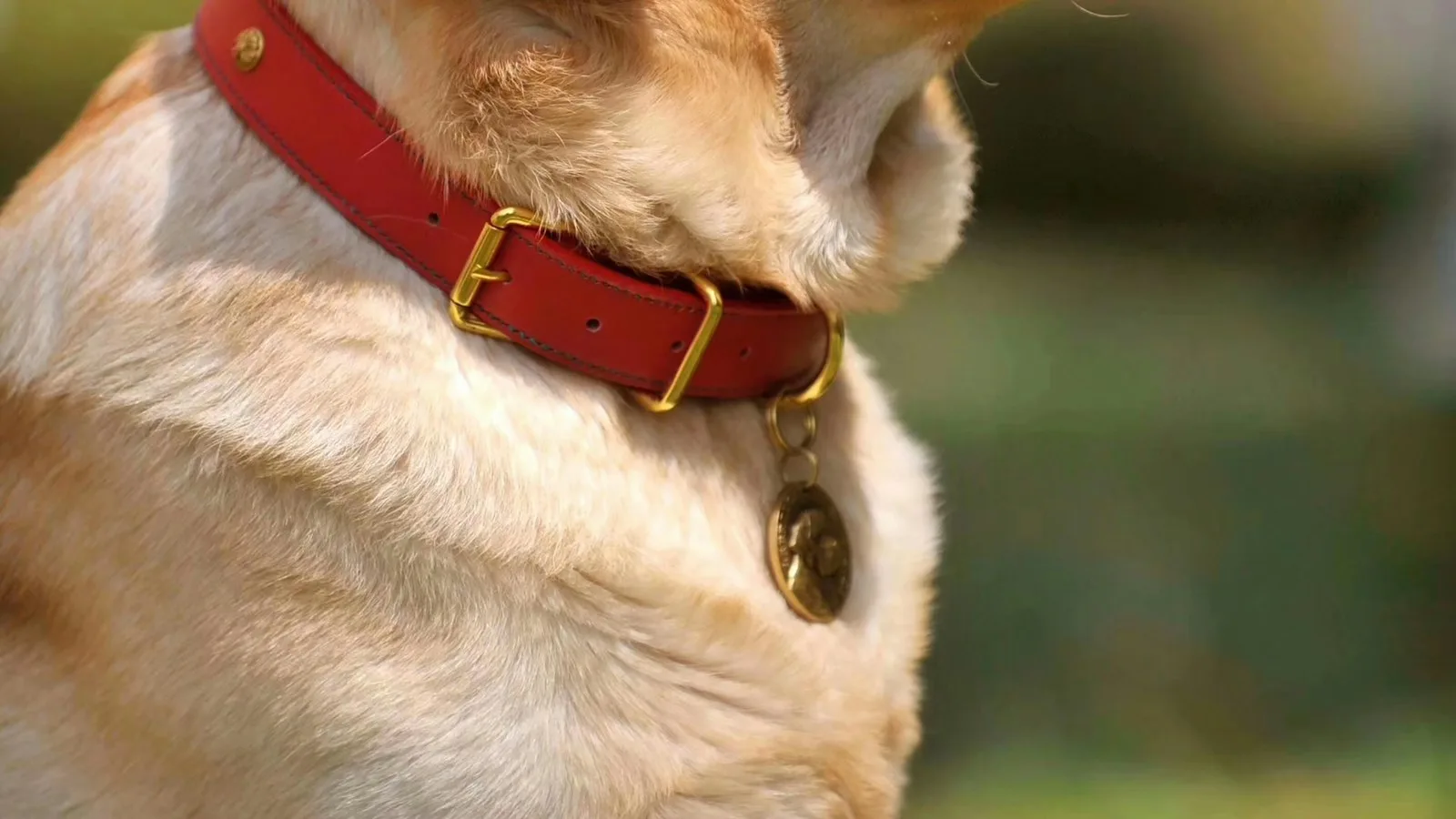
GOV.UK says a dog must still wear a collar and tag with your name and address when in a public place. The dog owner's legal checklist sets this out alongside the other rules every owner should know.
The tag goes on whatever else you use. Even where a council order means your dog has to be on a lead, as our guide to lead laws and PSPOs explains, the collar and tag rule still applies.
Getting a dog or puppy
GOV.UK says you should ask for proof that a microchip has been fitted before getting a dog. You can ask to see any of these:
a microchip certificate
vet records
a pet passport
You may also be able to see microchip information in the dog's pet insurance papers. Once the dog is yours, you must make sure the microchip details are updated.
Microchips and travel
The chip matters if you're travelling, too. GOV.UK's pet travel rules say your dog must be microchipped before, or at the same time as, its rabies vaccination, or the vaccination has to be done again.
Our guide to taking your dog to the EU explains the rest of the process.
The rules at a glance
Rule | What GOV.UK says |
|---|---|
Deadline | Microchipped and registered by 8 weeks old |
Who fits it | A trained professional, for example a vet |
Where it's registered | A database that meets government standards |
Keeping it current | Your responsibility, for example when you move house |
In public | A collar and tag with your name and address as well |
Penalty | A fine of up to £500 |
At what age must a puppy be microchipped?
GOV.UK says all dogs in the UK must be microchipped and registered on a database by the time they're 8 weeks old.
What's the fine for not microchipping a dog?
You can be fined up to £500 if your dog isn't microchipped when they need to be, and up to £500 if they aren't registered on one of the databases that meet government standards.
Does my dog need a collar tag if it's microchipped?
Yes. GOV.UK says a dog must still wear a collar and tag with your name and address when in a public place.
How do I update my dog's microchip details?
Contact the database company your dog is registered with. You might be charged a fee. If you don't know which database it is, you can check the microchip number using the online checker GOV.UK links to, or ask a vet, a dog warden or a rescue centre to scan your dog.